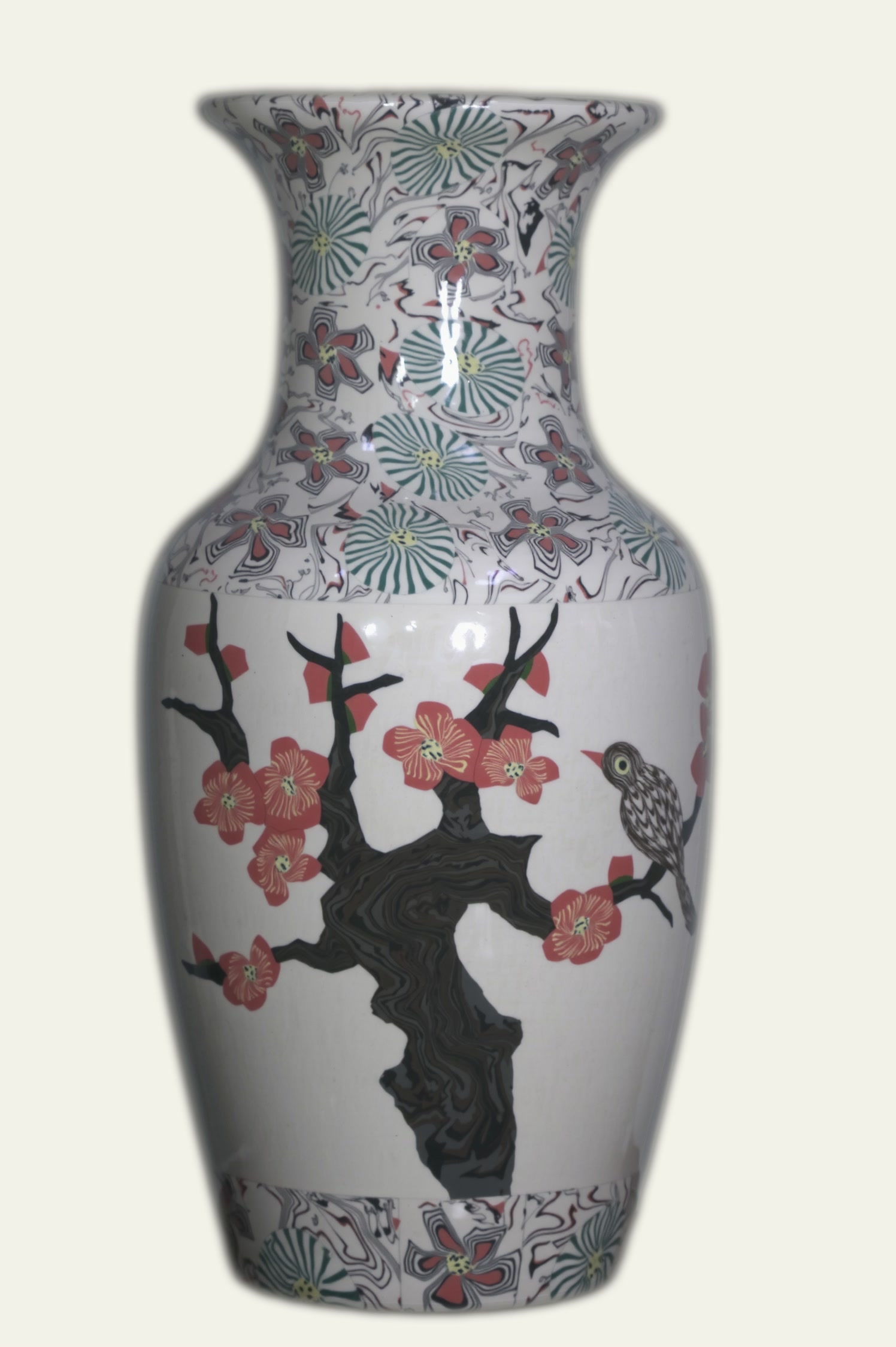
 Tree Pattern · 2024
Est. 1972 · Jiaozuo, China · National Intangible Cultural Heritage
Porcelain made by hand,
as it was 1,400 years ago.
Bespoke jiaotai porcelain from the Wenxian workshop. Marbled patterns drawn through clay cane, sliced, shaped, and fired in the tradition of the Tang Dynasty. Each piece is one of one.
Heritage · 618 — 907 CE
A Tang Dynasty technique, restored by one man in 1972.
Marbled jiao tai porcelain was the height of Tang ceramic art. The technique was lost for over a thousand years — and then a single shard, seen at a friend’s house in Jiaozuo, set the workshop’s master on a fifty-year path to bring it back.
For many years, scholars believed that the jiao tai marbling technique evolved from the multi-coloured tixi lacquer tradition. More recent research points instead to a closer connection with marbled glassware produced in the ancient Near East. Archaeological finds spanning regions from Afghanistan to Korea reveal the broad reach of this marbled aesthetic.
By the early 8th century, Tang potters had adapted these older influences into ceramic form, developing what is now recognised as the earliest example of marbled pottery in the world. A major production centre was the Gongxian kiln complex at Huangye, in Gongyi, Henan. Excavations there have uncovered numerous fragments showcasing the vibrant marbling effects achieved by Tang artisans — who created the patterns by twisting and kneading together clays of different colours, then slicing the cane to reveal the marble within.
Marbled ceramics enjoyed great popularity throughout the Tang period, appearing on everything from simple everyday bowls to ornate decorative vases. Their appeal stemmed from their resemblance to natural marble — patterns that suggest movement and depth. The interplay of light and dark tones gave each piece a sense of individuality and vitality, making these ceramics visually captivating works of art.
The Tang jiao tai technique was then lost for over a thousand years. Fragments survived in burial sites and museum collections, but no one in living memory knew how to recreate the marble-through-clay effect. In 1972, master Li Wenxian saw a small Tang fragment in a friend’s house and spent the next fifty years reconstructing the technique. The result is what we now call jiaotai — the same cane-twist, slice, and fire that Tang potters invented 1,400 years ago.
The Technique
Pattern drawn through
the clay, not on it.
In jiaotai porcelain, the marbling is not painted or glazed on. Coloured clays are twisted into a single cane, then sliced — every facet, every curve of the finished piece carries the pattern within it.
Coloured clays, twisted into a single cane.
Each cane is unique. The maker’s hand determines how the colours spiral — no two patterns are ever repeated.
Sliced to reveal the pattern within.
The maker chooses where the slice falls, deciding where the pattern concentrates, where it flows, where it thins.
The pattern runs through the piece.
Cut, shaped, dried, fired. The finished porcelain carries the cane pattern within its body, not as a surface decoration.
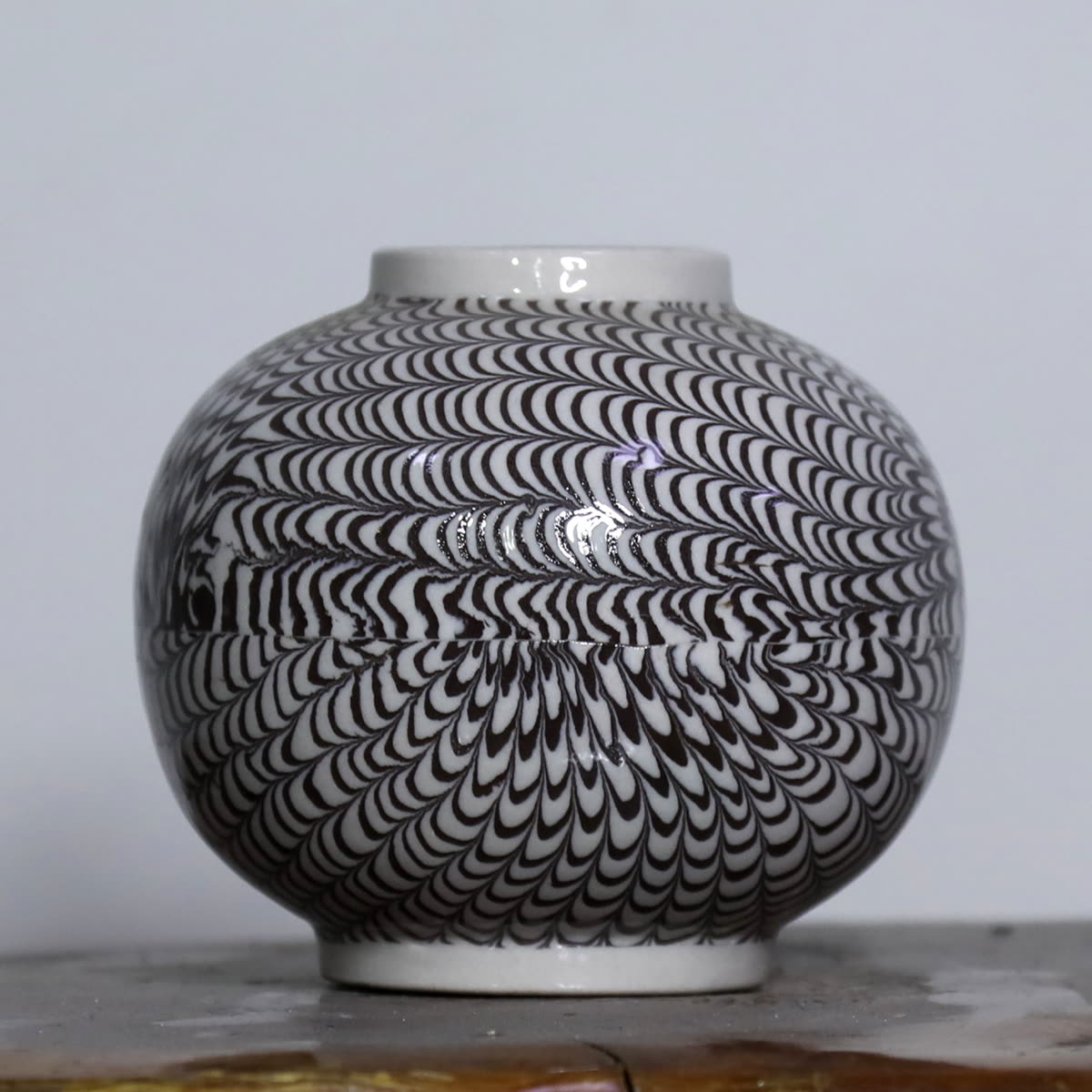 From the workshop · Jiaozuo, 2024
The Maker · 李文鲜
I saw a shard in 1972, and again in 2003. I could no longer suppress the dream — I told the expert, I want to unearth this millennia-old technique.
Bespoke Commissions
A piece made for you,
and only for you.
We accept a small number of commissions each year. The process is hands-on — pattern, form, palette, and scale all chosen in conversation with the workshop. International shipping arranged from Jiaozuo.
Begin a Commission →